Paying for College: A Parent's Guide From 7th Grade to Graduation

Paying for College: A Parent's Guide From 7th Grade to Graduation
Every standard way to pay for college, plus strategies most families never hear about. Learn why planning in 7th grade matters, how to keep assets out of the FAFSA's reach, whether a trust can help, how buying a four-plex near campus can erase years of borrowing, and how BYU Pathway Worldwide offers a three-year bachelor's degree for under $10,000.
The average cost of a four-year degree at an in-state public university is now close to $30,000 per year. At a private college, you can double or triple that number. Most families I sit down with have the same reaction when they hear the actual sticker price: They feel sick, then they feel stuck.
But sticker price is not what most families pay. More than 80% of students receive some form of financial aid, and the families who plan ahead pay far less than the families who show up senior year and hope for the best.
This guide covers every standard way to pay for college, plus several strategies that most families never hear about. Some of these, like buying a rental property near campus, can erase a significant chunk of borrowing. Others, like shifting assets before the FAFSA sees them, can unlock aid you would otherwise lose. All of them work best when you start early, ideally when your child is in 7th or 8th grade.
"Expert tax guidance can mean the difference between compliance and costly penalties, especially for Americans living abroad."
Randall Parker, MBA
The real cost of college (and why the sticker price lies)
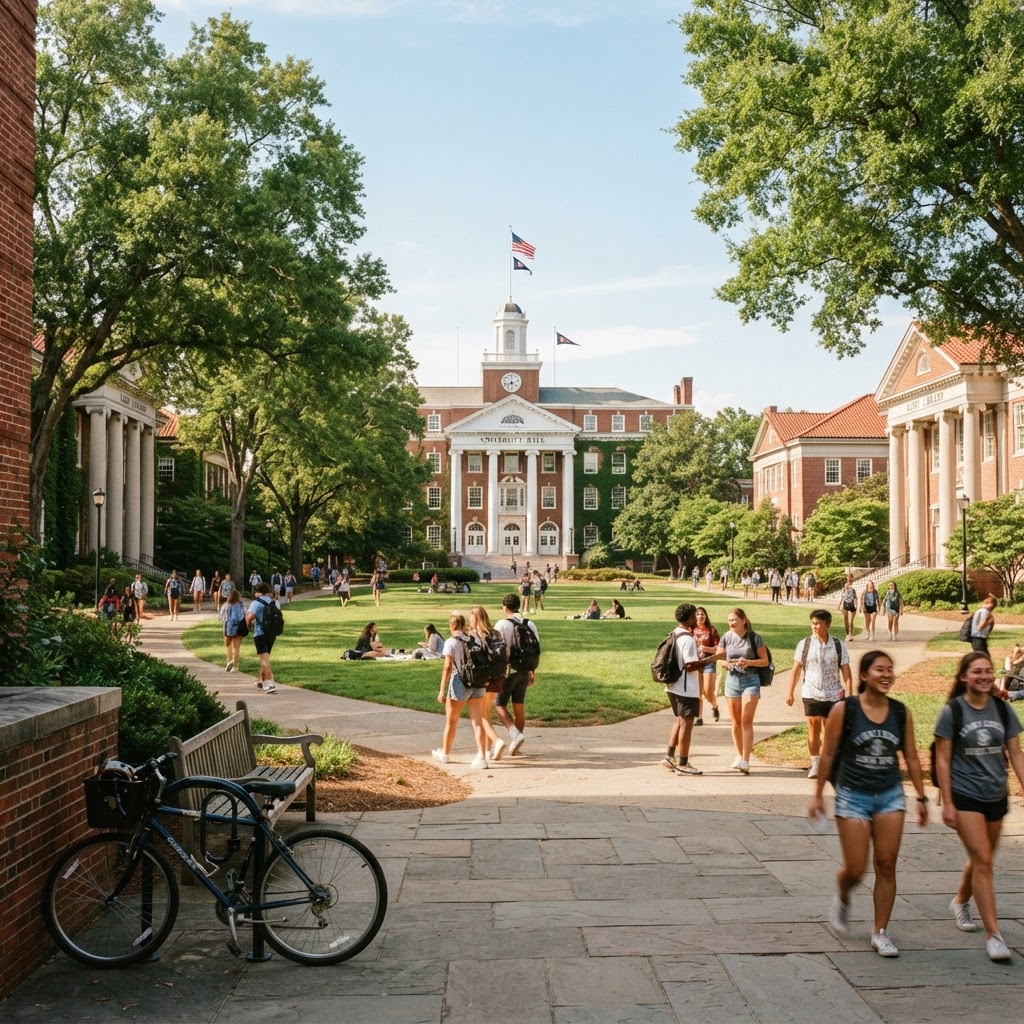
The published cost of attendance at a private university can exceed $80,000 per year. Very few families pay that number. The average net price, what families actually pay after grants and scholarships, is dramatically lower at most schools.
According to the College Board, the average published tuition and fees for 2025-26 are about $11,000 for in-state public, $30,000 for out-of-state public, and $43,000 for private. Room and board adds another $12,000 to $14,000. When you see a total cost of $60,000 or $70,000, remember that number is the ceiling, not the floor.
The mistake I see most often is families ruling out a school based on sticker price before they have applied and received a financial aid offer. A $70,000 school that offers your student $40,000 in grants costs less than a $30,000 school that offers nothing. Apply first, compare aid offers second, then decide.
Every college in the United States is required to post a net price calculator on its website. Find it. Use it. The calculator will ask about your income, assets, and family size, then give you an estimate of what families like yours actually pay at that school. The number is often $20,000 to $40,000 below the sticker price.
Why 7th and 8th grade is when college planning starts

Most families think college planning begins in 11th or 12th grade. That is two to four years too late.
The FAFSA, which determines eligibility for federal and most state aid, looks at your finances from what is called the "base year." For a student starting college in fall 2027, the base year is the calendar year that ends in 2025, when the student is in 10th grade. The financial picture you present during that base year determines your Student Aid Index, and that number follows you through college.
If your child is in 7th or 8th grade right now, you have three to four years to position your finances before the base year begins. That is the window where you can move assets, pay down debt, adjust income timing, and set up savings vehicles in ways that maximize aid eligibility. Once the base year arrives, your options narrow significantly.
This is not about hiding money or doing anything improper. It is about understanding how the formula works and arranging your legitimate finances in the order that produces the best result. Families who do this can see five-figure differences in aid.
The other reason to start early is academic. AP courses, which can earn college credit, are available starting in 9th grade. A student who takes four or five AP classes and passes the exams can enter college with a semester or more of credits. That is a semester of tuition saved, and it requires planning that starts in 8th grade when course selection begins.
How the FAFSA actually counts your money

The FAFSA formula divides your household into two categories: Parent assets and student assets. They are treated very differently.
Parent assets are assessed at up to 5.64% of their value in the Student Aid Index calculation. That means a $100,000 savings account in the parent's name reduces your aid eligibility by up to $5,640 per year. Student assets, on the other hand, are assessed at 20%. The same $100,000 in the student's name reduces aid eligibility by $20,000 per year.
That difference, 5.64% versus 20%, is the single most important number in college financial planning. It is why keeping money out of your child's name is not a minor optimization but a fundamental strategy.
The FAFSA also counts parent income, assessed on a sliding scale that can reach 47% of income over certain thresholds. Student income is counted too, and a student earning more than the income protection allowance (about $9,000 for 2025-26) can see 50% of the excess counted against aid.
The FAFSA Simplification Act changed some of the old rules. Grandparent 529 distributions no longer count as student income, which was a major improvement. But the core principle remains: The formula weighs student assets far more heavily than parent assets.
Some schools use a second form called the CSS Profile, which digs deeper into your finances. The CSS Profile counts home equity, retirement account balances, and small business value, none of which the FAFSA counts. About 200 selective private colleges use the CSS Profile. If your student is applying to one of those schools, the planning strategy needs to account for both formulas.
Keep assets out of the student's name

If you have been putting money into a custodial account for your child, an UGMA or UTMA, you may have created an aid problem. Every dollar in a custodial account is a student asset, assessed at 20% in the FAFSA formula.
A family with $50,000 in a custodial account will lose $10,000 per year in aid eligibility. Over four years, that is $40,000 in lost aid, all because the money was in the wrong name.
If your child is still young enough, you can spend down custodial account funds on legitimate educational expenses before the base year. A laptop for school, tutoring, summer educational programs, a car for a driving teenager with insurance paid from the account. These are all valid uses of custodial funds that reduce the account balance before the FAFSA sees it.
If you are just starting to save, do not use a custodial account. Use a 529 plan owned by the parent, or keep the money in your own name. The difference in aid treatment is enormous.
Grandparents sometimes want to help by opening accounts in the grandchild's name. Redirect them. A 529 owned by a grandparent is now treated favorably under the FAFSA, while a custodial account in the grandchild's name is treated punitively. The same money, different account type, can cost you thousands in aid.
Move assets where the FAFSA cannot see them

The FAFSA does not count retirement accounts. Your 401(k), your traditional IRA, your Roth IRA, your 403(b), all are invisible to the formula. So is the equity in your primary residence.
This creates a legitimate planning opportunity. If you have savings sitting in a bank account or brokerage account, and you are a few years from the base year, you can shift that money into retirement accounts where the FAFSA will not count it.
Max out your 401(k) contributions. If you have a workplace plan, the 2025 limit is $23,500. If your spouse has one too, that is $47,000 per year moving off the FAFSA radar. If you are over 50, add catch-up contributions. If you are self-employed, a SEP IRA or Solo 401(k) lets you contribute even more.
You can also pay down your mortgage. Every dollar you put toward principal reduces your liquid assets, and your home equity is not counted. A family with $100,000 in savings and a $100,000 mortgage balance can pay off the mortgage and remove $100,000 from the FAFSA formula.
These moves take time. You cannot move $50,000 into a 401(k) the week before you file the FAFSA. But if you start in 7th or 8th grade, you have years to systematically shift assets into protected categories.
One caution: Do not drain your emergency fund or stop contributing to retirement just to game the FAFSA. The formula is a tool, not a religion. Keep enough liquid savings to handle real life. The goal is to position yourself sensibly, not to create financial risk for a formula.
Can a trust remove assets from the FAFSA?

Families often ask whether they can move assets into a trust to hide them from the FAFSA. The short answer is: It is more complicated than it sounds, and in most cases, it does not work the way people hope.
An irrevocable trust can remove assets from your estate for tax purposes. That part is true. Once you transfer money into an irrevocable trust, you no longer own it, and it is not counted as part of your taxable estate. But the FAFSA is not a tax return. The FAFSA has its own rules about what counts, and those rules look right through trusts in many cases.
If the student or the parent is a beneficiary of an irrevocable trust, the FAFSA requires you to report the beneficiary's proportional share of the trust. So if you put $100,000 into a trust for your child's benefit, and your child is the beneficiary, the FAFSA will count that money as a student asset at 20 percent. You have not hidden anything. You have potentially made the problem worse, because money in a parent's name is assessed at 5.64 percent, while money in a trust for the student's benefit could be assessed at 20 percent.
If the trust distributes income to the student, that income is counted on the FAFSA and can be assessed at up to 50 percent. That is worse than keeping the money in a savings account.
There are a few narrow situations where a trust can help. If the trust is set up for someone other than the student or the parent, and neither the student nor the parent is a beneficiary, then the trust assets are not reported on the FAFSA. But you have also given up control of the money, and it is no longer available for college costs. A grandparent could set up a trust that benefits the student indirectly, but the FAFSA's grandparent 529 rules are now more favorable than a trust, and far simpler.
A special needs trust, used for a disabled beneficiary, has different rules and can be appropriate in specific situations. But that is a specialized tool for a specific need, not a general FAFSA strategy.
The bottom line: Do not set up a trust specifically to game the FAFSA. The rules are designed to prevent exactly that, and the penalties for getting it wrong can be worse than doing nothing. If you have a legitimate estate planning reason for a trust, talk to an estate planning attorney, and ask specifically about the FAFSA implications. But do not expect a trust to be a magic bullet for financial aid.
529 plans: The best savings vehicle, with a catch

A 529 plan is still the best college savings vehicle for most families. Contributions grow tax-free, withdrawals are tax-free for qualified education expenses, and many states offer a tax deduction for contributions.
A parent-owned 529 is counted as a parental asset at 5.64%, the same as other parent assets. That is manageable. The bigger issue is timing.
If you have a large 529 balance, spend it strategically. Use 529 funds for the first two years of college, before you file the FAFSA for the later years. Once the balance is drawn down, your remaining years of aid eligibility improve.
Grandparent-owned 529s are now more attractive than they used to be. Under the FAFSA Simplification Act, distributions from a grandparent 529 no longer count as student income. That means a grandparent can fund a 529 and distribute it during college years without the old 50% income penalty. This is a significant change that many families are not aware of.
One more development: Starting in 2024, unused 529 funds can be rolled into a Roth IRA for the beneficiary, up to $35,000 lifetime. The 529 must have been open for 15 years. This removes the old fear of overfunding a 529 if your child does not use it all.
Grants: Free money that does not come back

Grants are need-based aid that you do not repay. The largest is the federal Pell Grant, which in 2025-26 provides up to $7,395 per year for students from families with the greatest financial need.
State grants vary widely. California offers the Cal Grant, New York has the TAP program, and most states have their own need-based grants. Some states require their own financial aid application in addition to the FAFSA. Check your state's higher education agency.
Institutional grants come from the colleges themselves. These are the largest source of free money for most families at private colleges. A school that costs $60,000 per year might offer $30,000 in institutional grants to a student they want. This is why applying to schools where your student is in the top 25% of applicants matters: Those schools have the budget and the incentive to offer generous grants.
The key with grants is filing the FAFSA early. Some grant money is first-come, first-served. File as soon as the FAFSA opens, which is now October 1 for the following academic year.
Scholarships: The ones nobody applies for

Everyone knows about scholarships. What most families do not know is that the big, national scholarships are the most competitive and the least productive use of your student's time.
The local scholarships are where the money is. Rotary clubs, credit unions, local businesses, professional associations, and community foundations all offer scholarships that receive a handful of applications. A $2,000 scholarship with five applicants is a better use of a Saturday afternoon than a $50,000 scholarship with 50,000 applicants.
Have your student apply to 20 to 30 small scholarships. If they win half of them at $1,000 to $3,000 each, that is $10,000 to $45,000, which is a year of in-state tuition.
Look for scholarships tied to your student's specific background: Heritage, intended major, home county, parent's employer, union membership, military service. Niche scholarships have fewer applicants.
Start in 9th grade. Many scholarships are available to underclassmen, and the application practice pays off when the bigger awards open up in junior and senior year.
Federal student loans: What you are signing up for

Federal student loans should be the first borrowing option, before any private loan. They offer protections that private loans do not: Income-driven repayment, deferment, forbearance, and in some cases, loan forgiveness.
Direct Subsidized Loans are the best federal loan. The government pays the interest while your student is in school at least half-time and during the six-month grace period after graduation. For 2025-26, the interest rate is 6.55%, and the annual limit is $3,500 for freshmen, $4,500 for sophomores, and $5,500 for juniors and seniors.
Direct Unsubsidized Loans are available to all students regardless of need. Interest accrues from the day the loan is disbursed. The same 6.55% rate applies for 2025-26. Annual limits are higher, and independent students or students whose parents cannot borrow PLUS loans can get more.
Parent PLUS Loans let parents borrow up to the full cost of attendance, minus other aid. But the One Big Beautiful Bill Act, effective July 1, 2026, caps Parent PLUS at $20,000 per year and $65,000 lifetime per child. If your plan depends on Parent PLUS, you need to rethink it now.
The total federal loan limit for a dependent undergraduate student is $31,000 across four years, or $57,500 for independent students. That is not enough to cover four years at most schools, which is why savings, grants, and scholarships have to fill the gap.
Private student loans: The last resort, not the first

Private student loans come from banks, credit unions, and online lenders. They typically have higher interest rates than federal loans, sometimes exceeding 17%, and they do not offer income-driven repayment or the same protections.
Use private loans only after you have exhausted federal loans, grants, scholarships, and savings. If you must borrow privately, shop hard for the best rate. Applying with a creditworthy cosigner can lower the rate significantly.
Read the terms carefully. Some private loans have variable rates that can rise over time. Some require payments while the student is still in school. Some have prepayment penalties. Federal loans have none of these problems.
One thing most families do not know: Some older, federally-guaranteed private loans have a statute of limitations that can limit collection. If you are dealing with an old private student loan in default, talk to a professional before you start paying. You may have options you do not know about.
The four-plex strategy: Buy property near campus

This is the strategy that surprises people most when I bring it up. If your student is heading to a college town, buying a small multi-family property near campus can be one of the most effective ways to cut college costs.
Here is how it works. You buy a four-plex or a duplex within commuting distance of the school. Your student lives in one unit, rent-free or at a nominal rent. The other units are rented to other students. The rental income covers the mortgage, property taxes, and insurance. Your student, with your guidance, manages the property: Collecting rent, coordinating repairs, handling tenant communication. This gives them real-world experience and a line on their resume.
When your student graduates, you sell the property. In many college towns, real estate appreciates over four years. The combination of rental income during college, the tenants paying down your mortgage, and appreciation at sale can produce enough to pay off a significant chunk of student loans, or even eliminate them entirely.
The numbers work best in mid-sized college towns where property values are reasonable but rental demand is strong. Think of places like Tucson, Fayetteville, or Lubbock rather than Palo Alto or Boston.
This is not a strategy for every family. You need the capital for a down payment, and you need to be comfortable with the risks of real estate ownership. But for families with the resources, it can turn a four-year expense into a four-year investment.
Talk to a CPA about the tax implications. You can depreciate the rental portion, deduct expenses, and potentially use a 1031 exchange when you sell to defer capital gains. The owner-occupied portion has different rules. Get professional advice before you buy.
Community college, AP credits, and CLEP exams

The cheapest college credit is the one you never pay for.
Advanced Placement exams, taken in high school, can earn your student college credit at a fraction of the cost. Each AP exam costs about $100, and a passing score (usually 3 or higher) can earn 3 to 8 college credits depending on the school. That is $100 for credits that would cost $1,500 to $4,000 at a university.
CLEP exams work the same way. Your student studies independently, takes a CLEP exam for about $90, and earns credit if they pass. CLEP covers subjects like college algebra, American history, biology, and Spanish. A motivated student could enter college with a full semester of credits, or more, before setting foot on campus.
Community college for the first two years is another major saver. In-state community college tuition averages about $4,000 per year, compared to $11,000 for a four-year public university. Your student earns the same general education credits, then transfers to a four-year school for their major courses. The diploma says the four-year school's name. The total cost is roughly half.
Make sure your student checks transfer agreements. Many states have guaranteed transfer pathways from community college to state universities. The key is knowing which courses transfer and planning the schedule with an advisor.
BYU Pathway Worldwide: A three-year degree at a fraction of the cost

Most families have never heard of BYU Pathway Worldwide, and it is one of the best-kept secrets in higher education. Run by The Church of Jesus Christ of Latter-day Saints through BYU-Idaho and Ensign College, it offers a full bachelor's degree in as few as three years at tuition rates that are a fraction of what any other accredited school charges.
Here is what makes it different: A standard bachelor's degree requires 120 credits. BYU Pathway's degrees require only 90 to 96 credits, because the program counts certificates and applied skills toward the degree rather than padding with electives. A full-time student can finish in three years instead of four, which eliminates an entire year of tuition, room, board, and living costs.
The tuition rates are adjusted to the cost of living in each country. For members of the Church, tuition is subsidized by the Church. Non-members pay 25 percent more, but are still paying far less than they would at any other regionally accredited online university.
Sample tuition rates per credit for 2025-26 (LDS member rates):
 United States: $86 per credit, which is about $7,052 for a full bachelor's degree
- Canada: Adjusted to local cost of living, generally comparable to or slightly below the US rate
- Mexico: Adjusted to local cost of living, significantly lower than the US rate
- Philippines: $16.50 per credit, which is about $1,350 for a full bachelor's degree
- Other countries: Rates vary by country, adjusted to local economic conditions
On top of the already low tuition, the Heber J. Grant Scholarship offers 10 percent, 25 percent, or even 50 percent off based on financial need. A US student receiving the full 50 percent discount pays about $42 per credit, or roughly $3,800 for an entire bachelor's degree. That is less than one semester at most community colleges.
There is also a 25 percent Returned Missionary discount for those who have served a mission within the last five years, and a one-time 50 percent Mentor Bridge discount for students at risk of dropping out due to financial barriers.
Important limitations: BYU Pathway does not participate in federal financial aid. Students cannot use Pell Grants or federal student loans. The program is entirely online, which means no campus housing, no in-person social experience, and no access to campus facilities. For some students, that is a feature. For others, it is a dealbreaker.
The degrees are accredited by the Northwest Commission on Colleges and Universities (NWCCU), the same accreditor that covers BYU, the University of Utah, and other major institutions. Credits transfer, and the degree is recognized by employers and graduate schools.
For a student who wants a bachelor's degree without the debt, who is self-disciplined enough for online learning, and who does not need the traditional campus experience, BYU Pathway can cut the total cost of a degree from $100,000 or more down to under $10,000. That is not a typo. Under $10,000 for a full bachelor's degree from a regionally accredited university, in three years instead of four.
If your student is a member of the Church, or simply looking for the most affordable accredited degree path available, this program deserves a serious look. Check current rates and program details at byupathway.edu, since tuition is updated annually.
Negotiate your financial aid offer
Most families do not know you can negotiate a financial aid offer. You can, and colleges expect it.
If your student is accepted at multiple schools, you can use the better offer as leverage. Write a professional appeal letter to the financial aid office at the school your student prefers. State that your student wants to attend but the current offer makes it difficult, and that another school has offered more. Ask them to reconsider.
Colleges have discretionary funds for this exact situation. They would rather adjust an offer by $5,000 than lose a student they admitted. The worst they can say is no.
Timing matters. Appeal after you have all your offers, usually in March or April, and before the May 1 decision deadline. Be specific about the competing offer and specific about what you need.
Changes in your financial situation can also trigger an appeal. Job loss, medical expenses, a divorce, or a drop in income since you filed the FAFSA are all valid reasons to ask for a reassessment. Financial aid offices have professional judgment authority to adjust your package based on changed circumstances.
Tax credits that cut your real cost

Two federal tax credits directly reduce the cost of college.
The American Opportunity Tax Credit gives you up to $2,500 per student per year for the first four years of college. The credit covers 100% of the first $2,000 in qualified expenses and 25% of the next $2,000. Forty percent of the credit is refundable, meaning you can get up to $1,000 back even if you owe no tax.
The Lifetime Learning Credit gives you up to $2,000 per tax return per year for any level of higher education, including graduate school and part-time study. It covers 20% of up to $10,000 in expenses.
You cannot claim both credits for the same student in the same year, but you can use the American Opportunity Credit for one student and the Lifetime Learning Credit for another in the same tax year.
Income limits apply. For 2025, the American Opportunity Credit phases out for single filers between $80,000 and $90,000, and for married filers between $160,000 and $180,000. The Lifetime Learning Credit has higher limits. If your income is above these ranges, plan with your CPA to see if you can still benefit by adjusting income timing.
Work-study, employer assistance, and military benefits

Federal Work-Study gives your student a part-time job, often on campus, and the earnings do not count against future aid eligibility. The pay goes directly to the student, who can use it for living expenses. It is not a huge amount, typically $2,000 to $4,000 per year, but it helps and it builds a work history.
Employer tuition assistance is an underused benefit. Many companies, including Starbucks, Target, Walmart, and UPS, offer tuition assistance or fully funded degree programs for employees. Your student could work part-time at one of these companies and have a chunk of tuition covered. Some employers offer up to $5,250 per year tax-free under IRS Section 127.
Military benefits are substantial. The Post-9/11 GI Bill can cover full tuition at a public university, plus a housing allowance and a book stipend. ROTC scholarships can cover full tuition in exchange for a service commitment. Service academies like West Point and the Naval Academy are free but require a service obligation after graduation.
Income-share agreements are a newer option where a school or private funder pays your tuition in exchange for a percentage of your income after graduation for a set number of years. Read the terms carefully. They can work out well or poorly depending on your post-graduation income.
Repayment: Paying it off without drowning

If your student graduates with loans, the repayment strategy matters as much as the borrowing strategy.
For federal loans, start with the Standard Repayment Plan, which pays off the loan in 10 years with fixed payments. If the payments are too high, income-driven repayment plans like SAVE, PAYE, or IBR cap your payment at a percentage of your discretionary income. These plans can lower payments significantly, but they extend the loan term and increase total interest paid.
The SAVE plan, introduced in 2023 and modified since, can reduce payments to as low as 5% of discretionary income for undergraduate loans, and it has an interest subsidy that prevents balances from growing when your payment does not cover interest. For some borrowers, the payment is $0.
Public Service Loan Forgiveness forgives the remaining balance on federal Direct Loans after 120 qualifying payments while working full-time for a public employer, including government and most non-profits. If your student plans to work in teaching, nursing, government, or a non-profit, PSLF can erase the remaining balance tax-free after 10 years.
Refinancing into a private loan can lower your interest rate, but you lose federal protections like income-driven repayment and PSLF. Only refinance if you are certain you will not need those protections, and shop multiple lenders.
For private loans, there is no income-driven repayment. If you are struggling, talk to your lender about hardship options. Some lenders offer temporary forbearance or interest-only periods.
One important note: Do not sacrifice retirement savings to pay off student loans faster. If your employer offers a 401(k) match, that is free money with an immediate 100% return. Max that out before putting extra toward loans. You can borrow for college, but you cannot borrow for retirement.
A timeline you can actually follow

If your child is in 7th or 8th grade, start now. Open a 529 plan if you have not. Stop contributing to custodial accounts. Begin shifting savings into retirement accounts. Start talking with your child about what they are interested in, without pressure.
In 9th and 10th grade, keep grades up and encourage your student to take AP or honors courses. Research CLEP exams for subjects your student is strong in. Continue maxing out retirement contributions to reduce FAFSA-visible assets. Begin researching schools and their net price calculators.
In 11th grade, build a school list that includes financial safety schools where your student is in the top 25% of applicants. Start scholarship applications. Take AP exams. Have the first real conversation about what your family can afford.
In 12th grade, file the FAFSA on October 1. Apply to a mix of schools. Compare aid offers in March and April. Appeal if the offers are not enough. Make the final decision by May 1.
During college, have your student work part-time, apply for scholarships every year, and keep grades up to maintain merit aid. If you are using the four-plex strategy, help your student manage the property and track expenses.
After graduation, choose a repayment plan that fits your student's income. Pursue PSLF if eligible. Do not refinance federal loans unless you are sure. And if you bought property, sell it at the right time to pay down the loans.
The families who come out ahead are not the ones with the most money. They are the ones who started early, understood the system, and made deliberate choices. If you have questions about your specific situation, schedule a consultation. Every family's numbers are different, and the strategies that work for one may not work for another.
More Articles


Have Questions About This Topic?
Schedule a free consultation with Randall Parker, MBA, 40+ years of tax and financial expertise at your service.
Schedule Free Consultation →